
In response to Russia's invasion of Ukraine, many sanctions are imposed on Russian individuals and companies. But what should banks, insurers, and other financial institutions do if new sanctions are imposed?
As a financial institution, you must be able to continuously determine whether your relationships are covered by sanctions schemes, or whether your services and transactions are related to the sanctions schemes. Your institution must also (be able to) inform DNB or AFM about this without delay on the basis of Section 3 of the 1977 Sanctions Act Supervision Regulations.
You can't choose whether the
sanction regulations are complied with and refrain from continuous screening of relationships.
Types of Financial Sanctions
Financial sanctions are restrictive measures taken against countries, persons or entities with the aim of ending violations of international peace and security (such as terrorism), the violation of human rights, the destabilization of sovereign states or the spread of weapons of mass destruction. There are different types of financial sanctions:
- Freezing measures
- Ban on investing in certain sectors.
- Allow loans or insurance.
- Import of export van bepaalde goederen te financieren.
Sanctions lists
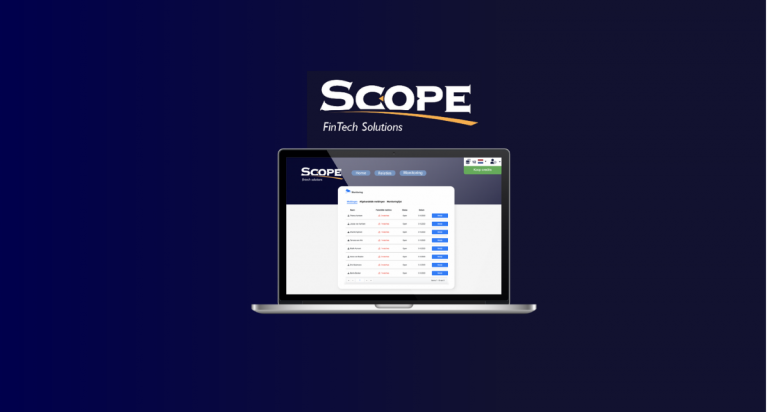
Freezing measures are the most common form of financial sanctions. They target individuals and entities targeted by the sanctions regimes and prevent them from financing their harmful practices. Most sanctions regimes contain a list of persons and entities subject to freezing measures. Persons or entities are regularly added or removed from these lists. This is where CDD On Demand comes in. With the help of CDD On Demand you can check people and companies once on, among other things, the sanction lists and then place them on the monitoring list. As soon as there is a change to the sanctions list that affects the person or company you have placed on the sanctions list, you will automatically be notified and can take action. Every company in the financial sector must be able to take follow-up steps at all times if this is the case. For example, banks must be able to freeze someone's bank account, insurers are not allowed to pay anything, trust offices must be able to stop money flows to a 'target company'. As soon as an institution such as a bank notices that they have a relationship with someone or a party on the sanctions list, they have a 'hit'. You must immediately report this to a supervisor.
Who should be checked?
The Sanctions Act gives a broad definition of the term 'relationship', i.e. anyone who is involved in a financial service or financial transaction. These include:
- Clients.
- Representatives or Agents.
- UBOs of the clients.
- Beneficiaries of a product, for example in the event of a payment on a life insurance policy, or transfer of funds within national borders or internationally.
- Other party to a financial transaction or product, for example when paying out non-life insurance.
- Person(s) involved in a financial transaction in which an object company of a trust office is a party.
- Directors of clients and client-related parties.
Please note this is not an exhaustive list. The term 'relationship' is defined so broadly because both the direct and indirect provision of financial resources or services are covered by the sanctions.
Comply with Sanctions Act quickly and efficiently with CDD On Demand
With the help of CDD On Demand you can quickly and efficiently comply with a number of requirements from the Sanctions Act. For example, you can use the UBO check to find out the UBOs of a relationship and quickly check them in a flow for active and historical sanctions, among other things. You can also check all your clients at once in a batch and then place them on the monitor list. The monitoring list is now very up-to-date because the sanctions list is regularly adjusted and by placing persons and entities on the monitoring list you do not have to manually check whether there is a change at one of your clients. You will receive a notification in your mailbox when a possible 'hit' occurs and you can then take further steps.
Don't wait any longer and make sure you continuously check your clients against sanctions lists. Better be safe than sorry!
